Evaluating is a crucial process in mapping, construction, and land advancement that has actually gone through an incredible advancement throughout the years. What is the Innovation Method for Precision Checking in Montreal? Discover Strategy a Survey with 3D Laser Scanning! . Typical checking techniques in Montreal, as in many various other components of the globe, counted heavily on manual techniques and devices such as theodolites, chains, and degrees. These devices called for a considerable quantity of time and manpower to determine distances, angles, and elevations. Surveyors required to literally pass through the terrain, usually under challenging problems, to collect the essential information for creating maps or preparing for building tasks. The accuracy of these methods was mostly based on the ability and experience of the land surveyors, and while quite accurate, there was constantly some space for human error.
Modern techniques, on the other hand, take advantage of technical advancements to accomplish higher accuracy, effectiveness, and ease of data collection. One such cutting-edge tool is 3D laser scanning, a non-intrusive technique that captures detailed 3D images of objects and landscapes. This innovation is revolutionizing the method studies are performed in Montreal.
3D laser scanning, additionally referred to as LiDAR (Light Discovery and Ranging), entails sending out laser beam of lights in the direction of a target and gauging the time it considers the light to show back to the scanner. This details is then made use of to compute accurate distances, leading to a collection of factors referred to as a "" point cloud"" that stands for the checked location in 3 dimensions. The point cloud data can be processed to produce extremely exact 3D designs, which are invaluable for a wide variety of applications including city preparation, heritage preservation, framework advancement, and construction.
The advancement method for precision checking using 3D laser scanning starts with preparing the survey. This includes specifying the range and objectives of the survey, establishing control factors, and establishing the optimum placements for the laser scanner to cover the whole location of interest. The planning stage is important for making certain that the survey is implemented effectively, with very little interruptions and redundancies.
When the plan remains in area, property surveyors utilize 3D laser scanners to record the data. These devices are usually mounted on tripods and can be run from another location, significantly decreasing the requirement for surveyors to accessibility challenging or harmful surface. The speed of data acquisition is another significant advantage; a website that would take days to evaluate with standard methods can currently be checked in simply a few hours.
After the information is accumulated, it is processed using specialized software to develop in-depth 3D designs. These versions can be analyzed, shared electronically, and used for
The arrival of 3D laser scanning technology has actually revolutionized the area of precision surveying, and no place is this more obvious than in the dynamic metropolis of Montreal. This dynamic Canadian city, with its blend of historic style and modern-day framework, provides one-of-a-kind challenges and opportunities for land surveyors. The development strategy for accuracy surveying has actually progressed significantly with the assimilation of 3D laser scanning, transforming the means specialists in Montreal plan and implement their studies.
3D laser scanning, additionally called LiDAR (Light Detection and Ranging), is a sophisticated technology that records detailed three-dimensional details regarding physical things and the atmosphere. It functions by discharging a laser light beam in the direction of a target and determining the moment it considers the light to mirror back to the scanner. This procedure happens at extremely quick rates, making it possible for the capture of millions of data factors in an issue of minutes. These data points, called factor clouds, form an accurate electronic representation of the scanned location.
In Montreal, where the conservation of heritage sites is as crucial as the building of brand-new growths, 3D laser scanning provides a non-intrusive and extremely exact method of recording existing conditions. Surveyors can record the minutest information of a website without physical call, making it excellent for sensitive or inaccessible areas. For brand-new buildings, this technology help in the creation of as-built models, guaranteeing that the last build adheres specifically to the style specs.
The procedure of intending a study with 3D laser scanning in Montreal begins with a clear understanding of the project requirements. Surveyors need to take into consideration the scope of the task, the level of detail required, and the end-use of the information. As soon as the goals are set, they can pick the ideal scanning tools and techniques to achieve the desired end results.
During the study, numerous scans from various settings are often necessary to get a full photo of the website. These private scans are then aligned and merged into a thorough 3D version. Advanced software application devices permit property surveyors to procedure and evaluate the point cloud data, extracting useful info such as dimensions, volumes, and architectural deformations.
The benefits of using 3D laser scanning for accuracy evaluating in Montreal are numerous. It significantly reduces the time and labor required for traditional checking approaches, and the high degree of accuracy reduces the risk of pricey errors. Additionally, the digital nature of the data makes it quickly shareable amongst project stakeholders, promoting much better communication and collaboration.
In conclusion, the advancement technique for precision surveying in Montreal has been
Exact surveying has constantly been the cornerstone of successful building and construction, renovation, and documents tasks. In Montreal, a city where historic beauty mixes with modern design, the need for accuracy takes on an also higher relevance. The growth technique for precision surveying has seen a cutting edge shift with the arrival of 3D laser scanning technology. This modern technology has redefined the conventional methods by offering quicker, extra accurate, and incredibly thorough representations of physical areas. Here's a detailed procedure of intending a study using 3D laser scanning in the context of Montreal's checking landscape.
Action 1: Define the Job Extent
Before starting the study, it's crucial to define the job extent. In Montreal, this could entail detailed building details on a heritage structure, a vast business site, or an intricate framework network. Comprehending completion goal, whether it's for remodelling, building, or historical conservation, establishes the phase for all the succeeding actions.
Step 2: Pick the Right Devices
The next step is picking the appropriate 3D laser scanning equipment. Not all scanners are developed equivalent; some master indoor atmospheres, while others are much better matched to substantial exterior rooms. Montreal's differed landscape demands a versatile scanner that can catch great details with high accuracy. Aspects such as array, resolution, and speed of the scanner should line up with job needs.
Action 3: Survey the Location
Montreal's varied weather condition can pose difficulties, so it's important to prepare the study for perfect problems. As soon as on website, the study group develops recommendation factors and checks for any type of barriers that may hinder the scanning process. The team likewise figures out the variety of scans needed and the best locations to put the scanner to make sure complete protection.
Step 4: Conduct the Scanning
With everything in position, the real scanning starts. The 3D laser scanner functions by releasing laser beam of lights and catching the mirrored light, which is then made use of to develop a factor cloud. This point cloud will serve as a digital representation of the surveyed location, using a degree of information that standard methods can not match.
Tip 5: Data Processing
After the scan is full, the raw data undergoes processing. This involves tidying up the point cloud, lining up numerous scans for a cohesive design, and perhaps converting the data right into layouts suitable with CAD or BIM software application. This action is where the information starts to take on a usable form, allowing architects, designers, and coordinators to interact with the figure
The development of precision surveying has actually been marked by substantial technological improvements, and among the most groundbreaking growths in this area is the advent of 3D laser scanning, particularly in the facility and vibrant metropolitan environments such as Montreal. This sophisticated technique has actually changed the way land surveyors accumulate information and has actually facilitated the creation of very accurate and comprehensive designs of urban landscapes.
3D laser scanning, likewise referred to as LiDAR (Light Detection and Ranging), is a non-intrusive technique that captures the physical buildings of items and the setting with making use of laser light. This technology gives off numerous laser pulses per second towards the target location, and the time it takes for each pulse to return is determined to determine precise distances. The outcome is a thick collection of information factors, called a point cloud, which can be made use of to generate detailed three-dimensional depictions of the scanned area.
One of the main advantages of 3D laser scanning for accuracy surveying in urban atmospheres is its unmatched accuracy. The high fidelity of information captured allows for the development of digital twins of buildings, frameworks, and landscapes with millimeter-level accuracy. This is crucial in a city like Montreal where historic structures, contemporary style, and detailed infrastructure exist side-by-side, and where specific measurements are necessary for both preservation and growth purposes.
One more advantage is the rate of information collection. Standard evaluating techniques can be lengthy, especially in thick city areas with countless features to measure. 3D laser scanning substantially decreases the moment required to survey a website, as it can catch detailed information in an issue of mins or hours, relying on the dimension and complexity of the location. This efficiency not only reduces labor costs yet also decreases interruptions in busy metropolitan settings.
In addition, 3D laser scanning improves safety and security for both the property surveyors and the general public. By making it possible for remote data collection, surveyors can prevent dangerous areas or situations, such as high web traffic locations or unstable structures. The security of the general public is additionally guaranteed as the technology allows for minimal interference with everyday activities, decreasing the threat of mishaps associated with typical surveying tools established on-site.
Data caught via 3D laser scanning can additionally be conveniently shared and incorporated right into different software systems for additional evaluation, which is essential for collective metropolitan advancement tasks. Architects, engineers, and building and construction specialists can work with the very same accurate models, making sure uniformity and lowering errors throughout the project lifecycle.
In Montreal, a city with a rich background and a vivid city fabric, planning
In the bustling city of Montreal, the development of accuracy surveying has taken a considerable jump onward with the assimilation of 3D laser scanning innovation. This innovative approach to evaluating is transforming the method professionals capture and evaluate data, supplying exceptional accuracy and performance in a selection of construction and remodelling jobs. In this essay, we will discover the development technique for accuracy surveying in Montreal and exactly how 3D laser scanning is made use of to plan surveys with exceptional precision.
The core of precision surveying in Montreal rests on making use of 3D laser scanning, likewise referred to as LiDAR (Light Discovery and Ranging). This advanced modern technology utilizes a laser to determine and catch the physical features of a room or structure in 3 measurements. The scanner gives off millions of laser beam of lights per second, which bounce off surface areas and return to the sensing unit, offering specific measurements of range.
When planning a survey with 3D laser scanning, the primary step is to develop the survey purposes. This can include recognizing the architectural stability of a heritage structure, drawing up utility networks, or getting ready for an intricate building job. Land surveyors need to establish what level of information is required and the best viewpoint for putting the scanner to cover the entire area of rate of interest.
Once the goals are established, property surveyors conduct a site visit to acquaint themselves with the location and identify any kind of potential obstacles that might hinder the laser scanning procedure. These can consist of moving automobiles, pedestrians, or ecological elements such as illumination and weather. This reconnaissance is essential for guaranteeing that the scanning procedure goes smoothly and that the information gathered is of the best.
The actual study process entails establishing the laser scanner on a tripod and systematically catching data from various areas. Overlapping scans make certain full insurance coverage and are later sewn together utilizing specialized software program to produce a detailed electronic depiction of the evaluated location. This electronic design, known as a factor cloud, includes millions of individual information factors that can be adjusted and examined to extract important understandings.
The elegance of 3D laser scanning lies in its convenience and precision. It can catch minute information of complicated geometries and massive atmospheres, making it indispensable for engineers, engineers, and building and construction professionals. For instance, in a successful case study, precision checking was utilized to document the intricate façades of historical structures in Old Montreal. The resulting 3D versions supplied engineers with the thorough info needed to intend restoration job while protecting the distinct building heritage.
One more effective application of precision checking in Montreal involved the expansion of
The advancement of precision surveying methods has actually been transformed by the arrival of 3D laser scanning modern technology, which has actually offered land surveyors with the capability to capture in-depth and exact representations of settings and frameworks. In Montreal, as in other components of the world, this innovation has become a very useful tool for experts in construction, architecture, and city preparation. Nonetheless, in spite of its numerous benefits, 3D laser scanning is gone along with by a collection of difficulties and limitations that should be acknowledged and attended to.
Among the key challenges dealt with by land surveyors utilizing 3D laser scanning in Montreal is the high first price of devices. The investment needed for a high-grade 3D laser scanner can be considerable, which can be a barrier for small companies or specific property surveyors. Along with the upfront expense, the upkeep and prospective updates to software program and hardware can additionally include in the monetary burden.
Another constraint is the dependancy on line-of-sight. Laser scanners can only capture surface areas that are straight noticeable to them. In complicated metropolitan settings such as Montreal, with its blend of historic and modern design, this can lead to information gaps where the laser can not reach due to obstructions. Land surveyors should therefore plan their scans carefully and may need to execute multiple scans from various locations to ensure complete insurance coverage.
Weather can likewise affect the efficiency of 3D laser scanning. Damaging weather condition, such as heavy rainfall or snow, which Montreal can experience, can disrupt the accuracy of the laser scans. Cold temperatures can impact devices performance and battery life, while intense sunshine can saturate sensors, decreasing the quality of the information captured.
Data handling is another location where challenges occur. The raw information accumulated from 3D laser scans is typically large and calls for significant computational power and time to refine into useful designs. This handling can become a bottleneck, specifically for large-scale tasks, demanding robust hardware and competent drivers who can take care of and control the data effectively.
Furthermore, while 3D laser scanning offers high accuracy, it is not unsusceptible to errors. Calibration, tool security, and user experience all play critical functions in the precision of the last outcome. Inaccurate information can bring about costly mistakes in the preparation and construction phases of a project, stressing the requirement for strenuous quality control procedures.
Last but not least, there is a discovering contour connected with 3D laser scanning modern technology. Surveying professionals should stay abreast of the most up to date advancements and be skilled at making use of facility software for data analysis. This needs recurring training and professional advancement,
Future Innovations in Accuracy Evaluating Technologies and Approaches
In the bustling metropolis of Montreal, the development of precision checking strategies is an essential element of city development, facilities maintenance, and construction jobs. The advancement method for precision evaluating in Montreal is increasingly embracing advanced modern technologies, with 3D laser scanning at the leading edge of this transformative period. Let's explore how this innovation is transforming the checking landscape and what future advancements might even more improve precision in evaluating approaches.
Uncovering the Prospective of 3D Laser Scanning
3D laser scanning, also referred to as LiDAR (Light Detection and Ranging), has changed the field of precision checking by providing fast, precise, and detailed dimensions of physical rooms. This non-intrusive technique involves sending out laser beam of lights in the direction of the target location and recording the reflected light to develop point clouds. These factor clouds form high-resolution digital 3D models of the surveyed area.
In Montreal, the application of 3D laser scanning is critical in the conservation of historic architecture, the building and construction of new growths, and the development of transport networks. Surveyors can now record the complexities of complex exteriors, screen construction progress in real-time, and make certain that projects adhere to rigorous tolerances, all with marginal disturbance to the surrounding environment.
Planning a Survey with 3D Laser Scanning
Preparation a survey with 3D laser scanning innovation begins with developing clear purposes. In Montreal, where both contemporary high-rises and historical piles exist together, it's essential to customize the survey technique according to the job's needs. Surveyors need to take into consideration factors such as the level of information called for, the size of the area to be surveyed, and the prospective obstacles that could impede the scanning process.
When the objectives are set, the next action is to place the laser scanning tools purposefully around the site to guarantee detailed coverage. As the information is accumulated, it's refined through innovative software application that stitches with each other the point clouds, producing a cohesive 3D model. This electronic depiction after that serves as a foundational device for architects, engineers, and stakeholders to assess and make educated decisions.
Visualizing Future Developments
The future of accuracy surveying in Montreal looks intense, with the possibility for considerable improvements on the horizon. One such growth is the combination of artificial intelligence (AI) with 3D laser scanning. AI formulas can improve data handling, automate feature recognition, and detect changes with time, bring about also
Montreal is classified as a warm-summer humid continental climate (Köppen climate classification: Dfb).[87][88] Summers are warm to hot and humid with a daily maximum average of 26 to 27 °C (79 to 81 °F) in July; temperatures in excess of 30 °C (86 °F) are common. Conversely, cold fronts can bring crisp, drier and windy weather in the early and later parts of summer.
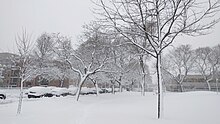
Winters in Montreal bring cold, snowy, windy, and at times, icy weather.
Winter brings cold, snowy, windy, and, at times, icy weather, with a daily average ranging from −10.5 to −9 °C (13.1 to 15.8 °F) in January. However, some winter days rise above freezing, allowing for rain on an average of 4 days in January and February each. Usually, snow covering some or all bare ground lasts on average from the first or second week of December until the last week of March.[89] While the air temperature does not fall below −30 °C (−22 °F) every year,[90] the wind chill often makes the temperature feel this low to exposed skin.
Spring and fall are pleasantly mild but prone to drastic temperature changes; spring even more so than fall.[91] Late season heat waves as well as "Indian summers" are possible. Early and late season snow storms can occur in November and March, and more rarely in April. Montreal is generally snow free from late April to late October. However, snow can fall in early to mid-October as well as early to mid-May on rare occasions.
The lowest temperature in Environment Canada's books was −37.8 °C (−36 °F) on January 15, 1957, and the highest temperature was 37.6 °C (99.7 °F) on August 1, 1975, both at Dorval International Airport.[92]
Before modern weather record keeping (which dates back to 1871 for McGill),[93] a minimum temperature almost 5 degrees lower was recorded at 7 a.m. on January 10, 1859, where it registered at −42 °C (−44 °F).[94]
Annual precipitation is around 1,000 mm (39 in), including an average of about 210 cm (83 in) of snowfall, which occurs from November through March. Thunderstorms are common in the period beginning in late spring through summer to early fall; additionally, tropical storms or their remnants can cause heavy rains and gales. Montreal averages 2,050 hours of sunshine annually, with summer being the sunniest season, though slightly wetter than the others in terms of total precipitation—mostly from thunderstorms.[95]
iScano's advanced technology aids in the modernization of infrastructure projects by providing precise data for efficient planning and execution in Montreal.
3D laser scanning is a technology that captures the spatial data of objects or environments using laser light. In Montreal, our services aid construction projects by providing accurate measurements, reducing errors, and enhancing project efficiency.
Yes, iScano's mobile capabilities enable on-site 3D laser scanning services, even in remote or challenging terrains near Montreal.
iScano actively supports the digitization of the construction industry in Montreal by providing digital solutions for data capture and analysis.